Best Paper for Coloring Pages and Art Supplies
The best paper for coloring pages depends on your coloring medium. Standard twenty-pound copy paper (75 gsm) works well for basic crayons and colored pencils. For alcohol-based art markers, watercolor washes, and heavy ink saturation, sixty-five-pound cover cardstock (176 gsm) or twenty-eight-pound smooth presentation paper (105 gsm) prevents bleed-through and paper buckling. Selecting paper with subtle surface tooth allows pencil pigment to adhere without tearing fragile fibers.
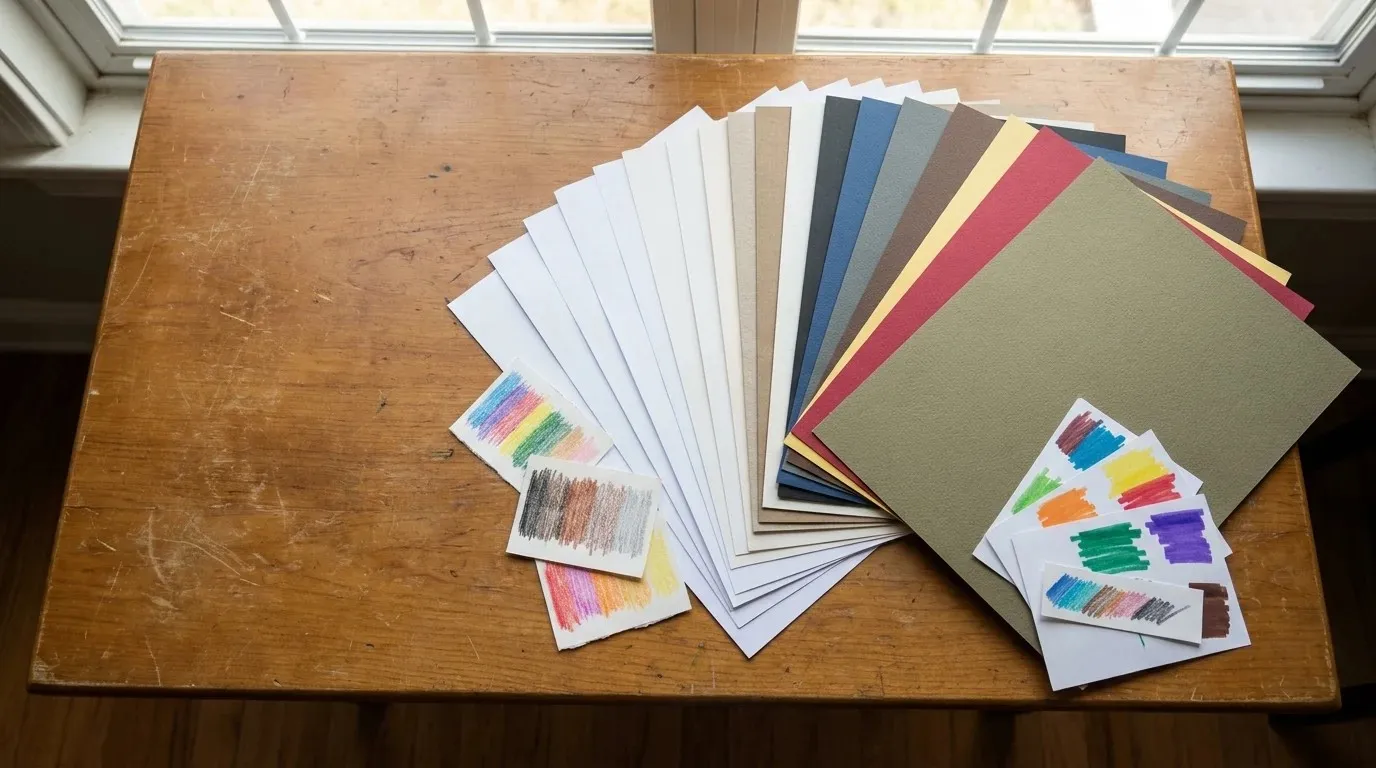
Best Paper for Coloring Pages and Art Supplies tool
On this page
Why paper choice transforms the coloring experience
When artists and hobbyists evaluate their coloring results, they frequently scrutinize their pencils, markers, or blending stumps. Yet one of the most important factors influencing your finished artwork is the paper substrate sitting beneath your coloring instruments. The exact same colored pencil can feel scratchy and pale on inexpensive office bond paper, yet glide smoothly and deposit saturated, buttery color across a premium sheet with balanced tooth.
This resource is an essential part of our comprehensive coloring guides at AI Print Works. Whether you are printing sheets from our free printable coloring pages archive or printing a twenty-page volume from our custom coloring book from photos service, matching your chosen coloring medium to the correct paper weight and surface texture protects your craft table from bleed-through, prevents sheet buckling, and elevates your artistic enjoyment.
Free Coloring Tool
Turn a photo into a coloring page
Upload any family, pet, or vacation photo and download a clean, printable coloring sheet in seconds.
Try the free toolUnderstanding paper weights from copy bond to heavy cardstock
Shopping for paper can quickly become confusing because American paper mills describe thickness using imperial basis weights (in pounds), whereas international paper standards measure mass in grams per square meter (gsm). Furthermore, in the North American system, a pound rating in one paper category cannot be directly compared to a pound rating in another.
How basis weight is calculated
In the United States, basis weight represents the weight in pounds of a full ream (500 sheets) of paper cut to its traditional uncut manufacturer sheet size:
- Bond, copy, and ledger paper: The uncut master sheet measures 17 by 22 inches. When 500 sheets of this master size weigh 20 pounds, the resulting cut 8.5 by 11 inch paper is sold as twenty-pound bond.
- Cover paper and cardstock: The uncut master sheet measures 20 by 26 inches. Because the master sheet area is significantly larger, a ream weighing 65 pounds yields substantially thicker, heavier individual sheets than 65-pound text paper.
Metric measurement simplifies this comparison by evaluating grams per square meter (gsm) uniformly across all categories. The primary paper weights used for printable coloring include:
20 lb bond paper (approximately 75 gsm)
Twenty-pound bond is the ubiquitous, everyday copy paper found in office copiers, school computer labs, and budget multi-function home printers.
- Characteristics: Thin, lightweight, and economical. It features low opacity, meaning drawings on one side are readily visible through the reverse side.
- Suitable mediums: Wax crayons and light colored pencil work by early learners.
- Drawbacks: Inadequate for adult coloring or wet media. Heavy colored pencil pressure causes the sheet to crease and buckle. Liquid ink from gel pens, felt markers, and alcohol markers bleeds through instantly, soaking onto desktops.
24 lb to 28 lb presentation paper (approximately 90 to 105 gsm)
Twenty-four-pound and twenty-eight-pound premium multipurpose papers (such as premium laser or bright white presentation sheets) represent a substantial upgrade over basic copy paper.
- Characteristics: Noticeably smoother, stiffer, and denser than twenty-pound paper. The surface is calendered under heated steel rollers during manufacturing to create a uniform, bright white sheet.
- Suitable mediums: Premium colored pencils, fine-liner ink pens (such as 0.3 mm or 0.5 mm pigment fineliners), and water-based brush markers applied with a light hand.
- Drawbacks: While water-based markers resist immediate strike-through, heavy repeated layering or blending can still weaken the cellulose fibers and cause localized feathering.
65 lb cover cardstock (approximately 176 gsm)
Sixty-five-pound cover stock (often sold as bright white cardstock or lightweight craft cover) is a popular, versatile substrate for home printable coloring pages.
- Characteristics: Rigid, sturdy, and substantial. Individual sheets feel like greeting cards or postcards. It resists bending, holds crisp corners, and lies completely flat on craft tables.
- Suitable mediums: Alcohol-based art markers, solvent blenders, heavy multi-layer colored pencil blending, gel pens, and light water-brush washes.
- Drawbacks: Because of its thickness, cardstock must be fed through printer trays that accommodate heavy media.
80 lb to 110 lb cover cardstock (approximately 216 to 297 gsm)
Heavyweight cover stocks are heavy, stiff boards engineered for professional book covers, business cards, and watercolor art.
- Characteristics: Extremely thick and durable with near-total opacity. It withstands moderate water media without cockling or warping.
- Suitable mediums: Gouache, watercolor washes, and aggressive wet blending techniques.
- Drawbacks: Many consumer home printers cannot safely bend 80 lb or 110 lb cardstock through internal roller mechanisms, resulting in frequent paper jams unless fed through a dedicated straight-pass rear slot.
Preventing bleed-through with markers and wet media
Bleed-through occurs when liquid coloring vehicles—such as water, alcohol, or solvent carriers—penetrate the microscopic voids between paper cellulose fibers and soak through to the back of the sheet or onto the table beneath.
Alcohol markers versus water-based markers
Understanding the chemistry of your coloring markers explains why different papers behave so differently:
- Water-based markers: Inks made with water and dye pigments swell paper surface sizing relatively slowly. On lightweight twenty-pound paper, excess water softens the internal cellulose binders, causing the surface to peel into small pill-like balls (known as paper pilling). On twenty-four-pound paper or sixty-five-pound cardstock, water evaporates quickly enough to prevent surface degradation.
- Alcohol markers: Art markers formulated with ethyl or isopropyl alcohol carriers (such as Copic, Ohuhu, or Prismacolor markers) have an exceptionally low surface tension. Because standard paper sizing is engineered to repel water rather than low-viscosity organic solvents, the alcohol carrier bypasses surface sizing and flows freely through capillary action between paper fibers. This capillary flow is what makes alcohol markers excel at seamless gradient blending, but it also causes ink to penetrate ordinary paper in seconds.
Strategies to eliminate bleed damage
To color with alcohol markers without ruining furniture or subsequent book pages:
- Print exclusively on 65 lb cardstock: The dense cellulose mass of cardstock absorbs a large volume of liquid solvent before the ink reaches the back of the sheet.
- Insert a sacrificial blotter sheet: Even on sixty-five-pound cardstock, saturated two-tone and three-tone alcohol blending will occasionally shadow through to the reverse side. Always slip two sheets of scrap copy paper or a smooth silicone craft mat directly underneath your active coloring page.
- Check our step-by-step tutorial on how to print coloring pages to configure proper margin scaling and driver settings before feeding cardstock into your printer.
Surface texture, paper tooth, and colored pencil performance
Colored pencils do not deposit color through liquid absorption. Instead, they deposit microscopic flakes of wax, oil, and mineral pigment through mechanical friction against the paper surface. The physical texture that creates this friction is known as paper tooth.
The role of microscopic paper tooth
Under a microscope, paper is not a flat plane; it consists of an interwoven network of wood pulp fibers forming peaks and valleys:
- If paper has too little tooth: Extremely slick, high-gloss photo paper has zero tooth. When you press a colored pencil against glossy paper, the pencil core slips across the surface without abrading. Pigment cannot grab hold, leaving faint, streaky marks that smudge off at a touch.
- If paper has balanced tooth: Smooth cardstock and vellum-finish papers feature fine microscopic tooth. As the pencil tip glides across the sheet, the paper fibers scrape off a thin, even layer of pigment, packing it tightly into the micro-valleys. This allows you to lay down five, six, or seven successive layers of color, building rich gradients and burnishing deep shadows.
- If paper has excessive tooth: Rough cold-press watercolor paper has deep, prominent valleys. Pencils deposit pigment only on the high ridges, leaving thousands of tiny white specks in the valleys unless heavy blending solvents or burnishers are applied.
For wax-based colored pencils (such as Prismacolor Premier) and oil-based colored pencils (such as Faber-Castell Polychromos), smooth sixty-five-pound cover cardstock with a subtle vellum or satin finish delivers the perfect compromise between smooth gliding and robust pigment retention.
Paper brightness, opacity, and color perception
Two technical paper specifications published by paper mills dramatically influence the visual impact of your finished coloring:
- Brightness rating: In the United States, paper brightness is measured using the TAPPI T452 standard on a scale from 1 to 100, measuring directional blue light reflectance at 457 nanometers. Standard office copy paper rates between 88 and 92 brightness, often appearing slightly gray or yellow. Premium cardstocks feature brightness ratings between 96 and 100. High-brightness paper creates crisp, high-contrast outlines and ensures pastel and vibrant colors pop with true tonal fidelity.
- Opacity percentage: Opacity measures the percentage of light prevented from passing through the sheet. A sheet with 100 percent opacity is completely opaque, with zero strike-through visibility. Twenty-pound copy paper typically offers roughly 88 percent opacity, causing back printing to show through distinctly. Sixty-five-pound cardstock typically offers 97 to 99 percent opacity, providing clean viewing whether the sheet is displayed on a refrigerator or mounted in a glass frame.
Printer feeding mechanisms and driver settings for cardstock
Desktop home printers are precision mechanical machines designed to pull flexible sheets from an internal cassette tray, wrap them around rotating feed cylinders, and propel them out into an exit hopper. Feeding rigid cardstock requires minor operational adjustments to prevent paper jams:
- Utilize rear bypass trays: Whenever possible, avoid loading sixty-five-pound cardstock into the bottom internal paper cassette. Bottom trays force the paper to execute a tight 180-degree U-turn around internal transport rollers, which can induce paper jams or leave permanent curved bends in heavy stock. Rear gravity-feed trays allow cardstock to travel downward in a straight or gently angled path.
- Fan your paper stack: Cardstock sheets cut at the mill can exhibit slight burrs or static cling along cut edges. Before loading sheets into the feed hopper, gently flex and fan the stack to introduce air between sheets.
- Set media type in printer properties: Always open your printer driver properties dialog and change the Media Type setting from Plain Paper to Cardstock, Heavy Paper, or Matte Presentation Paper. Selecting the heavy media profile adjusts internal roller motor torque, widens the printhead carriage clearance to prevent head strikes on thicker paper, and slows the feed mechanism to ensure precise ink placement.
By choosing sixty-five-pound bright white cardstock for wet markers and heavy pencil blending, or twenty-four-pound presentation paper for everyday line art, you help your printable coloring pages emerge with sharp lines and endure years of creative enjoyment.
Frequently asked questions
Can I use regular 20 lb copy paper for printable coloring sheets?
Yes, standard twenty-pound copy paper (75 gsm) is inexpensive and readily available for young children using wax crayons or light colored pencil strokes. However, its low density and thin cellulose structure cause wet inks from gel pens, felt markers, and alcohol markers to bleed through instantly onto tables. If you plan to use wet coloring tools or want to frame finished drawings, upgrade to heavier paper stock.
What paper weight is best to prevent marker bleed-through?
Sixty-five-pound cover cardstock (approximately 176 gsm) is the ideal paper weight for alcohol markers, brush pens, and heavy water-based ink pens. Its dense fiber structure absorbs ink without letting it seep through to underlying surfaces. Even with cardstock, heavy blending with alcohol markers can occasionally shadow through the back, so placing a scrap sheet behind your artwork remains a wise protective habit.
Will 65 lb cardstock jam my home printer?
Most modern inkjet printers and home laser printers handle sixty-five-pound cover cardstock easily. To prevent feed jams, load cardstock through your printer's manual bypass slot or rear gravity-feed tray if available, as this provides a straighter paper path than bending thick sheets around bottom tray rollers. Also ensure you select Cardstock or Heavy Paper in your printer driver settings to adjust internal roller tension.
Why is 65 lb cardstock so much thicker than 24 lb paper?
In the United States, paper basis weight is calculated by weighing 500 sheets (one ream) of paper at its uncut manufacturer master size. Standard bond copy paper is measured at an uncut size of 17 by 22 inches, whereas cardstock is categorized under Cover stock, measured at a larger uncut size of 20 by 26 inches. Consequently, 65 lb cover cardstock has roughly double the physical mass and thickness of 24 lb bond paper.
What is paper tooth and why does it matter for colored pencils?
Tooth refers to the microscopic surface texture of paper fibers. Smooth papers with subtle tooth act like tiny rasp teeth, catching and scraping wax or oil pigment off pencil cores as you sketch. Extremely slick or glossy photo paper lacks adequate tooth, causing pencil pigment to slide across the surface without sticking. Medium-tooth vellum or smooth cardstock allows colorists to build multiple rich layers of shaded color.
Is bright white paper better than natural or cream paper for coloring?
Bright white paper with a brightness rating of 96 or higher displays colors with clean, unaltered vibrancy, making it the preferred choice for detailed mandalas, vibrant flowers, and modern graphic illustrations. Cream or off-white paper provides a softer, vintage appearance that flatters sepia pencil sketches, historical scenes, and earthy wildlife art. For most downloadable printables, bright white cardstock ensures lines and colors appear crisp.