Free Printable Mandala Coloring Pages
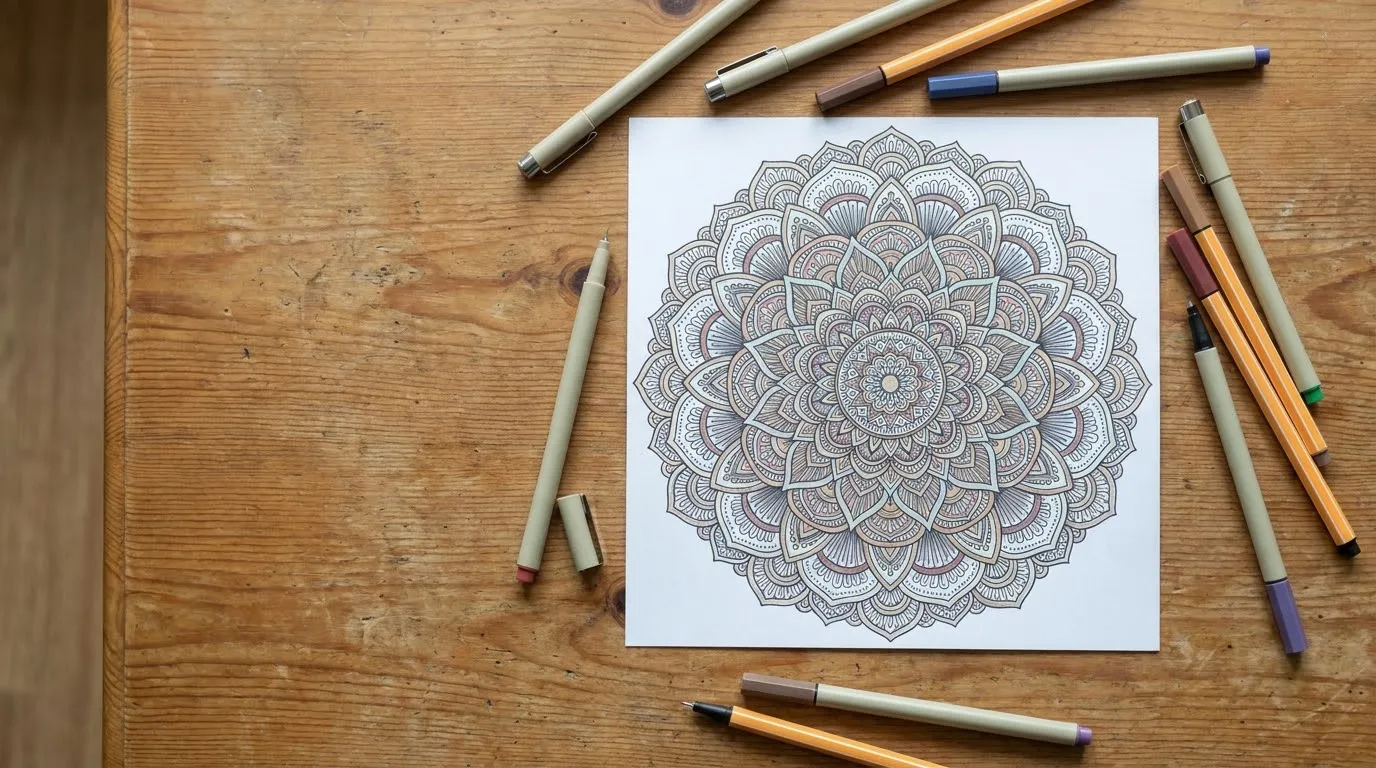
Free Printable Mandala Coloring Pages tool
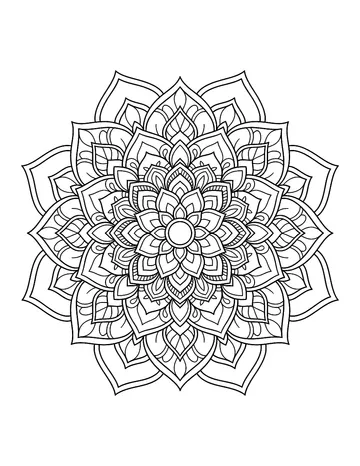


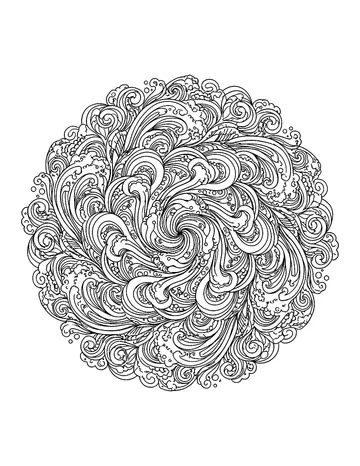
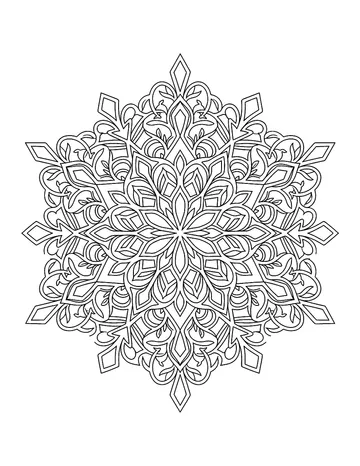
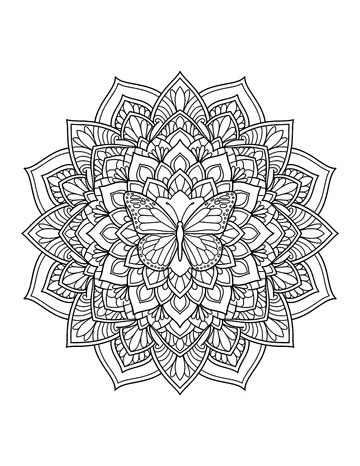
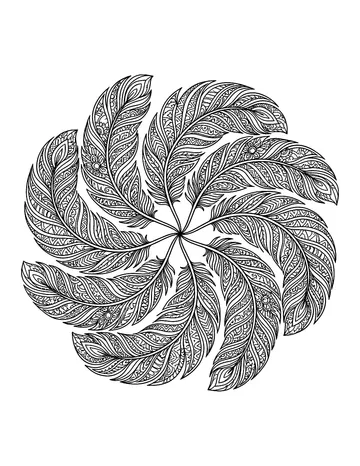
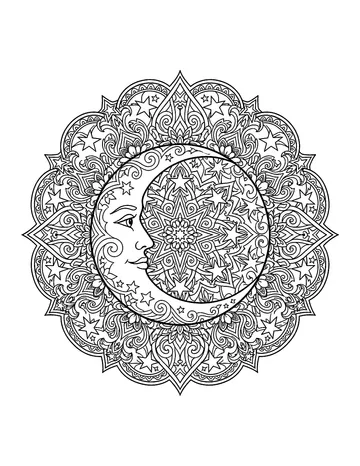
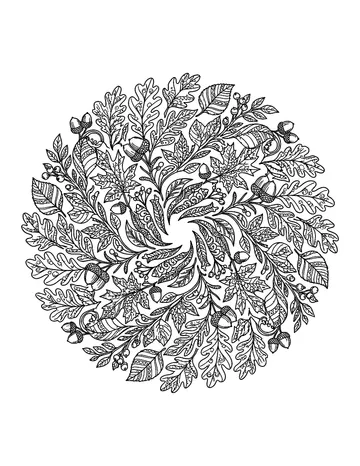



No coloring pages in this level yet. Try switching the filter above to view all pages.
On this page
Geometric balance and mindful coloring patterns
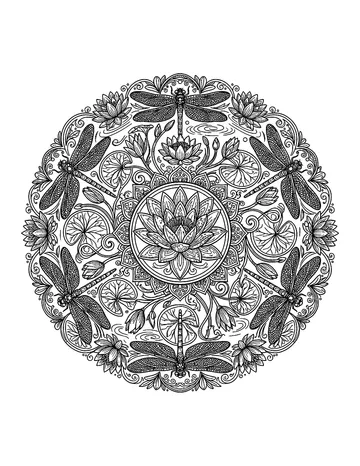
Welcome to our mandala collection, an adult series within the AI Print Works free printable coloring pages catalog. Mandalas offer a rhythmic coloring experience focused on symmetry, repetition, and calm attention. Across these adult designs—spanning a lotus mandala with layered petals, a sun mandala with rays, a moon and stars mandala, an autumn leaf mandala, an ocean-wave mandala, a seashell and coral reef mandala, a snowflake mandala, a butterfly mandala, a dragonfly and water lily mandala, a sunflower blossom mandala, a compass rose mandala, a paisley teardrop mandala, and a Celtic knot mandala—each sheet provides peaceful absorption.
As documented by reference resources including Encyclopædia Britannica, the term mandala originates from the Sanskrit word for circle or disc. In traditional Hindu, Buddhist, and Jain cultures, mandalas represent symbolic maps of the cosmos, illustrating the universe and guiding meditators through layers of awareness toward a spiritual center. Contemporary colorists embrace these concentric forms for mindful relaxation, creative flow, and aesthetic satisfaction. For more context on creative relaxation, read our overview of coloring for adults.
Free Coloring Tool
Turn a photo into a coloring page
Upload any family, pet, or vacation photo and download a clean, printable coloring sheet in seconds.
Try the free toolColoring tips for symmetry and color harmony
Approaching a dense geometric pattern can feel intimidating at first, but following a few straightforward techniques brings harmony to the finished page:
- Limit your palette: Rather than using every colored pencil in your box, select four or five harmonious hues, such as warm desert tones (terracotta, gold, sand, ochre) or cool botanical shades (teal, mint, indigo, moss). Repeating this controlled palette in radial symmetry creates a unified appearance.
- Decide your directional path: Starting in the center allows you to establish a strong focal point and carry color schemes outward across expanding rings. Alternatively, starting along the outer border frames the design and lets you build contrast inward toward a bright center.
- Rotate the paper: Keep your hand in a comfortable, relaxed resting position and spin the sheet as you work around concentric circles. This prevents smudging freshly inked sections and preserves steady line precision.
- Combine mediums: Use fine-liner gel pens for tiny background tessellations and soft colored pencils to shade larger radiating petals with gentle gradients.
Line verification, paper choices, and printing settings
Every sheet is generated with AI tools, then checked before it’s posted. We look for open outlines and stray marks before a sheet goes up, so color stays where you put it.
Due to the high line density of mandalas, paper selection is critical. Standard twenty-pound paper can buckle under pressure and often bleeds when using alcohol markers or fine-liners. We strongly advise printing mandalas on twenty-four-pound bright white paper or sixty-five-pound cardstock. Check our guide on the best paper for coloring for detailed weight specifications.
When printing, set your printer dialog to Fit to Printable Area and choose high-resolution black-and-white output. All sheets are free for personal, family, and educational classroom use. Commercial resale, publishing, or distribution of our files is prohibited.
Frequently asked questions
What does the word mandala mean and where did it originate?
According to Encyclopædia Britannica, the word mandala is derived from the ancient Sanskrit term for circle or disc. Historically developed within Hindu and Buddhist traditions, mandalas represent the cosmos and are utilized as sacred geometric diagrams for meditation, visualization, and inner contemplation.
Should I color a mandala starting from the center or the outside rim?
There is no single correct direction. Starting from the central circle creates an outward explosion of energy and helps establish a core color palette that guides outer petals. Starting from the outer perimeter allows you to build a protective visual frame that converges inward toward the focal point.
What tools work best for intricate mandala coloring patterns?
Fine-liner pens with nib sizes between zero point three and zero point five millimeters excel at tiny repeating geometry. High-pigment colored pencils with sharp points also allow soft gradient shading across concentric rings without bleeding through regular paper or smearing adjacent line art.
Are these mandala designs appropriate for beginners?
Our mandala collection features adult-level designs spanning a welcoming range of segment densities. Beginners can start with accessible patterns such as a lotus mandala with layered petals, a floral mandala with leaves, or a mandala with hearts and swirls before progressing to a geometric star mandala, a sun mandala with rays, a feather mandala, a Celtic knot mandala with woven bands, a stained-glass cathedral window mandala, and an intricate Moroccan tile mosaic mandala.
May I print these mandala sheets for yoga studios or wellness groups?
Yes. Community organizers, wellness coaches, yoga instructors, and therapists may print copies for in-person workshops, meditation retreats, or group relaxation classes. Commercial repackaging, publication, or online resale of our digital files and printed pages is strictly prohibited under our terms.