Coloring Guides and Printing Tutorials
Our comprehensive coloring guides help parents, educators, and adult colorists achieve clean, vibrant results from printable line art. Discover optimal printer settings for borderless printing and precise scaling, compare paper weights from standard twenty-pound bond to sixty-five-pound cardstock to stop marker bleed-through, and explore evidence-limited research regarding stress reduction in adult coloring. Every tutorial provides factual specifications verified against paper manufacturers, printer documentation, and peer-reviewed studies.
Coloring Guides and Printing Tutorials tool
On this page
Comprehensive reference guides for printable coloring art
Welcome to the central hub for coloring guides at AI Print Works. While coloring is an intuitive and relaxing pastime, achieving crisp lines, vibrant tones, and durable finished artwork requires an understanding of the technical tools behind the craft. Whether you are troubleshooting desktop printer scaling or selecting the perfect paper weight for alcohol markers, our guides provide factual, manufacturer-verified specifications and research-backed methods.
If you are looking for fresh illustrations to print immediately, browse our free printable coloring pages library to find a growing collection of clean line drawings across popular themes including animals, mandalas, and holidays.
Free Coloring Tool
Turn a photo into a coloring page
Upload any family, pet, or vacation photo and download a clean, printable coloring sheet in seconds.
Try the free toolPrinter settings, scaling, and borderless setup
Many colorists encounter frustration when a downloaded illustration prints with missing outer borders, clipped frame details, or faded, graying lines. Desktop inkjet and laser printers rely on specific mechanical transport rollers that impose physical margins on every sheet.
In our in-depth tutorial on how to print coloring pages, we walk through step-by-step printer configuration across popular brands:
- Page scaling mechanics: Understand the technical distinction between Actual Size (100 percent) and Fit to Printable Area. We explain how page scaling prevents perimeter lines from being lopped off by mechanical feed rollers.
- Borderless printing execution: Learn how automated driver expansion stretches line art past sheet edges, which paper media types permit borderless modes, and how to avoid excess ink collection on transport pads.
- Paper dimension standards: Compare North American Letter size (8.5 by 11.0 inches) with international ISO 216 A4 dimensions (8.27 by 11.69 inches), ensuring your downloads scale proportionately without distortion regardless of your location.
- Ink management: Optimize monochrome and grayscale driver options to utilize dense black pigment inks rather than composite color mixtures, ensuring sharp outlines while conserving expensive color cartridges.
Paper weights, fiber density, and bleed prevention
The paper you feed into your printer directly affects how your coloring tools perform on the page. Standard office copy paper is engineered for disposable text memos, not heavy ink saturation or repeated pencil blending.
Our practical investigation into the best paper for coloring pages provides exact paper specifications from major paper mills:
- Basis weight categories: Demystify why twenty-four-pound bond paper feels substantially lighter than sixty-five-pound cover cardstock, explaining how master ream dimensions determine American basis weight values.
- Bleed-through prevention: Examine how alcohol markers and heavy wet media penetrate porous paper sizing, and learn how upgrading to sixty-five-pound cardstock or inserting blotter sheets stops desk staining.
- Surface tooth and texture: Understand the microscopic friction required to shear pigment off wax and oil colored pencil cores, helping you choose between ultra-smooth presentation papers and toothy cardstocks.
- Printer feed capabilities: Learn how to feed thick cardstock through rear manual bypass trays to prevent roller jams and curl in home printers.
Research-backed benefits and limits of adult coloring
Coloring has evolved from a childhood activity into a popular self-care hobby among adults seeking structured relaxation. However, the internet is full of exaggerated medical claims regarding its psychological benefits.
Our thoughtful guide to coloring for adults examines what peer-reviewed scientific studies actually demonstrate:
- Controlled clinical trials: Review landmark randomized controlled experiments by researchers such as Curry and Kasser, examining how coloring pre-drawn geometric mandalas produces measurable short-term reductions in state anxiety.
- Structural focus versus blank paper: Learn why structured, repeating symmetrical designs induce a calming, mindful focus while unstructured blank-paper drawing can inadvertently trigger performance anxiety.
- Art therapy boundaries: Clarify the vital professional distinction between self-guided recreational coloring and credentialed, diagnostic clinical art therapy.
- Beginner starter workflows: Discover foundational pencil techniques, layering strategies, and ergonomic lighting tips to start your creative coloring practice comfortably.
Explore the detailed guides linked above to build confidence in your printing setup, paper choices, and coloring techniques.
Printing and coloring guides
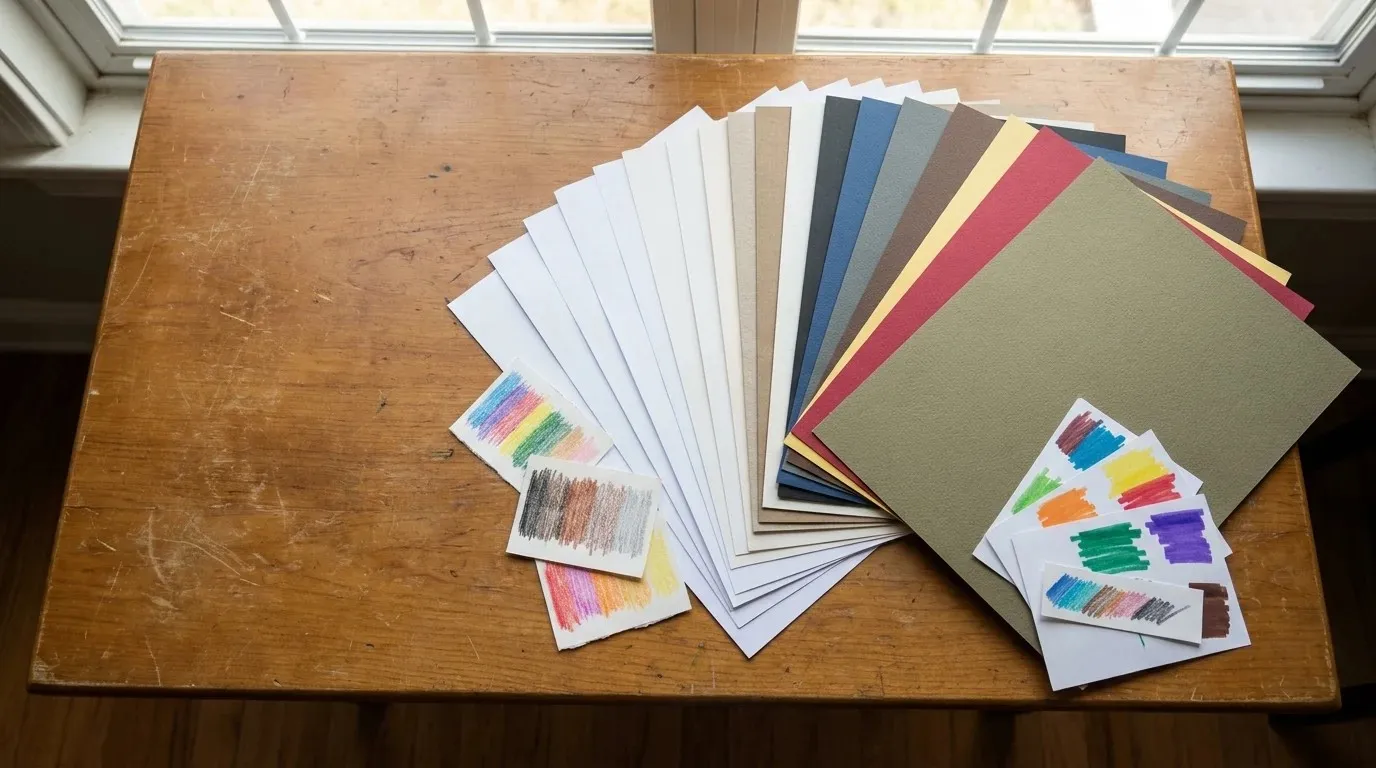
- Best Paper for Coloring Pages and Art SuppliesCompare paper weights from 20 lb copy paper to 65 lb cardstock. Discover how paper thickness and tooth prevent marker bleed and support colored pencils.
- Coloring for Adults: Evidence and Getting StartedDiscover evidence-limited benefits of adult coloring for stress and anxiety. Learn what peer-reviewed research shows and how to begin coloring at home.
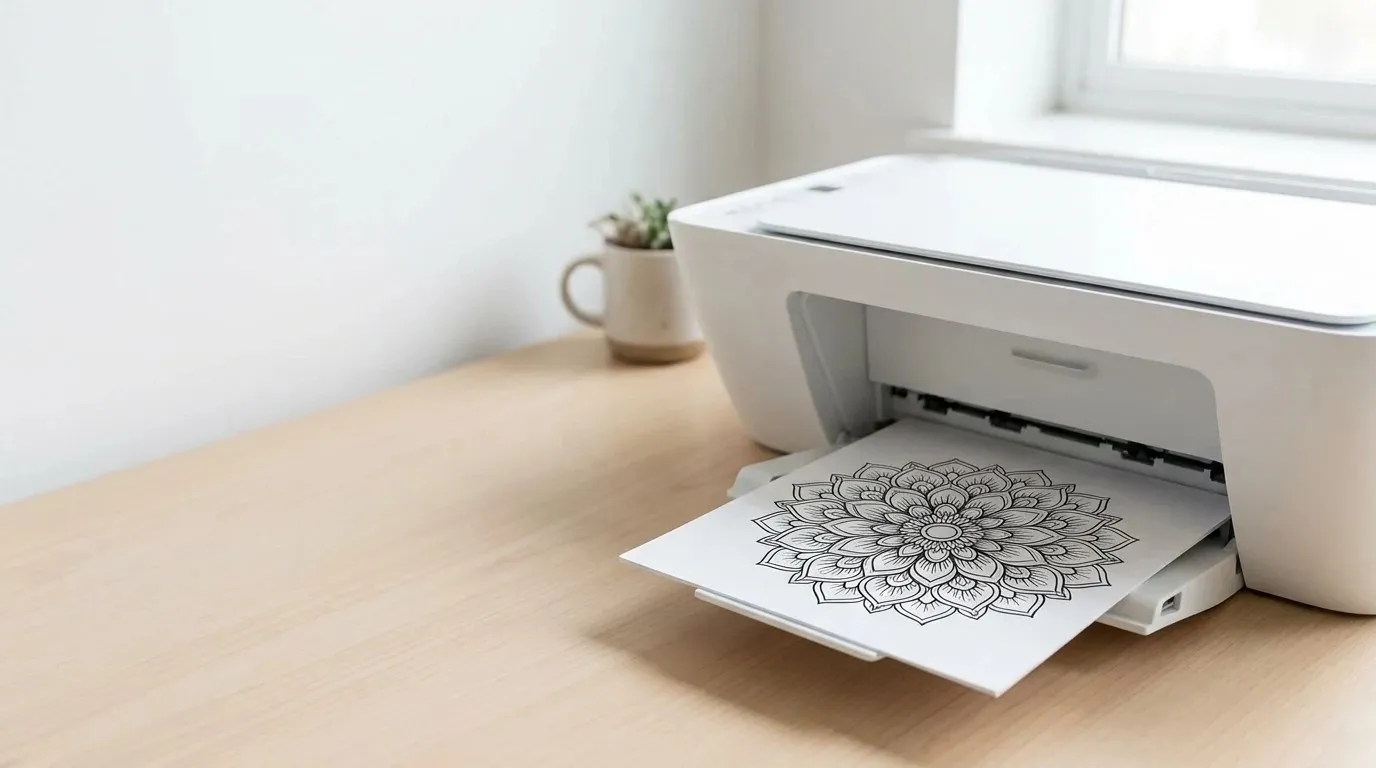
- How to Print Coloring Pages at HomeLearn how to print coloring pages cleanly on home printers. Master printer settings, page scaling, borderless modes, and paper sizing for Letter and A4.
 Best Paper for Coloring Pages and Art Supplies
 Coloring for Adults: Evidence and Getting Started
 How to Print Coloring Pages at Home
Frequently asked questions
What topics do these coloring guides cover?
Our tutorials cover the technical and artistic foundations of printable coloring. We explain home printer configuration, borderless page scaling, paper weight selections across bond and cover stocks, media comparisons between colored pencils and alcohol markers, and evidence-based perspectives on adult coloring for stress reduction. Each guide delivers actionable advice to elevate your creative coloring experience.
Why do printable coloring pages sometimes cut off at the margins?
Desktop home printers require a minimum mechanical margin—usually between 0.12 and 0.25 inches—to grip and pull the sheet through the paper path. If your print dialog is configured to print at 100 percent actual size, outer border elements may fall outside this printable boundary. Selecting Fit to Printable Area resolves this clipping issue.
What paper weight is recommended to prevent marker bleed-through?
Standard twenty-pound office paper absorbs liquid ink rapidly, leading to spider-web feathering and bleed-through to underlying desks. For water-based felt-tip pens or brush markers, twenty-four-pound or twenty-eight-pound smooth bond paper provides adequate opacity. When using alcohol-based art markers or light watercolor washes, sixty-five-pound cover cardstock provides the necessary fiber density to prevent bleeding.
Can coloring help adults manage daily stress and anxiety?
Peer-reviewed studies indicate that structured coloring—especially coloring geometric mandalas and complex symmetrical patterns—can produce modest short-term decreases in self-reported state anxiety. The repetitive, focused nature of coloring within pre-drawn lines promotes mindfulness and temporary distraction from rumination. However, coloring is a recreational coping tool rather than a substitute for clinical psychological therapy.
Are all the coloring pages discussed in these guides free to print?
Yes. All illustrations in our extensive library are completely free to download and print for personal, homeschool, and classroom educational applications. We inspect each sheet to ensure clean, closed lines that color smoothly without digital artifacts. You can also explore our browser tool to convert your personal photos into printable coloring pages.