Free Printable Space Coloring Pages
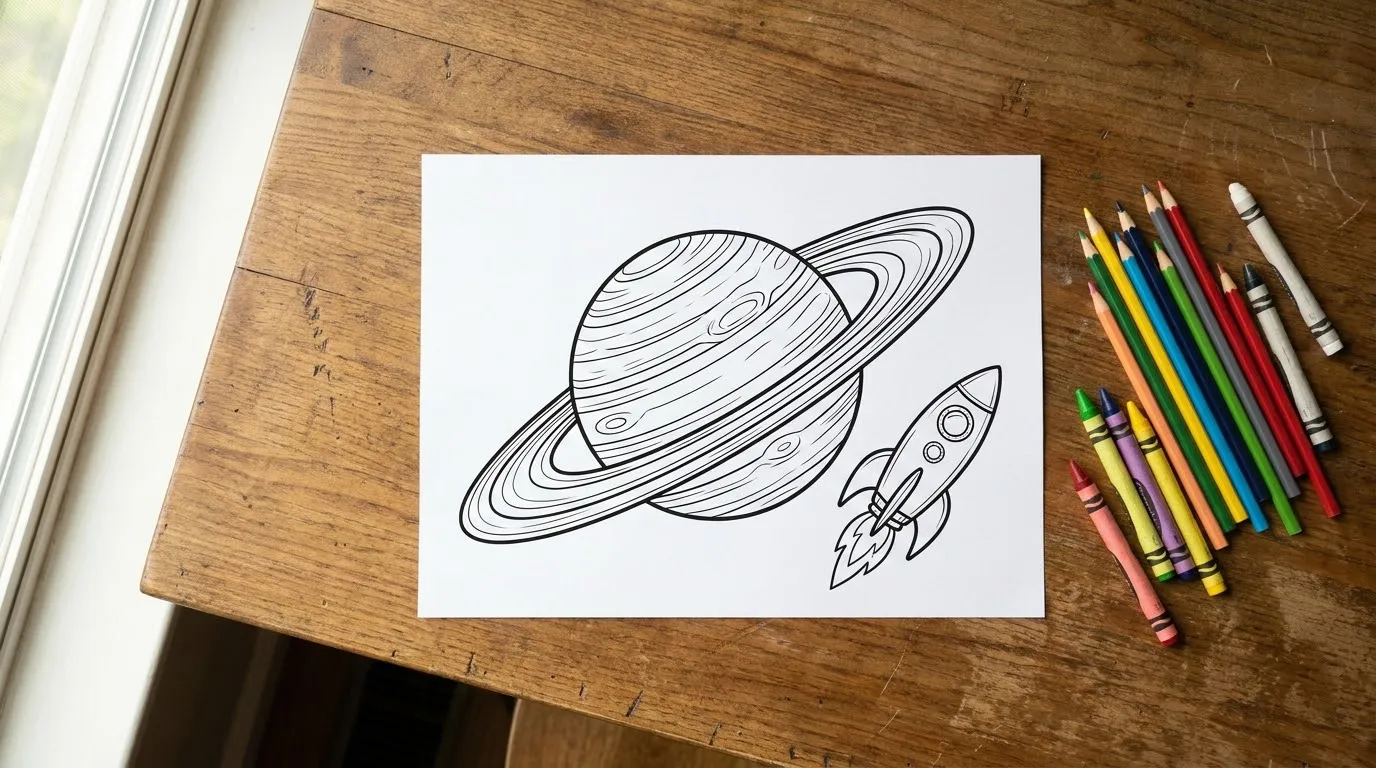
Free Printable Space Coloring Pages tool
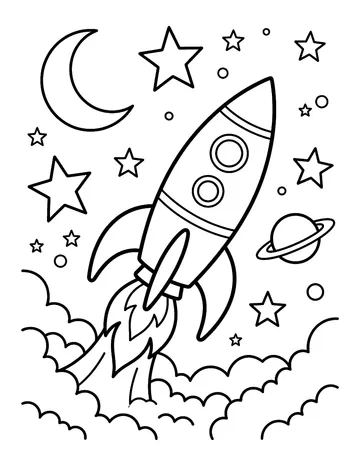
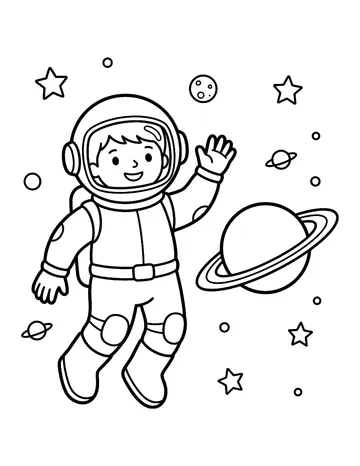
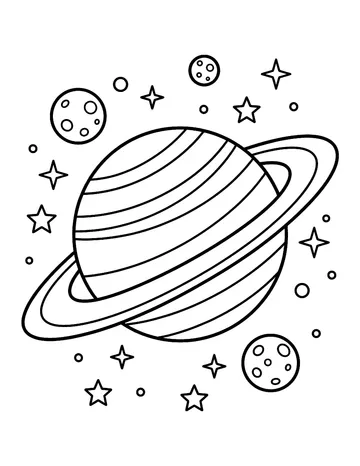
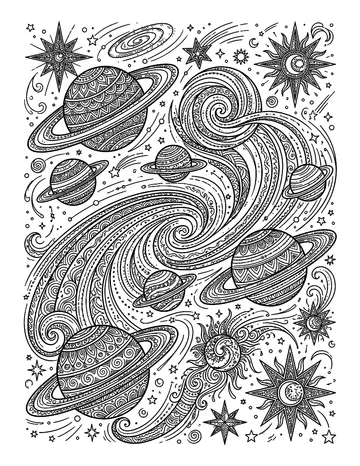
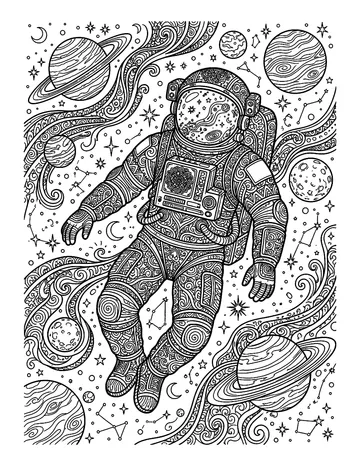
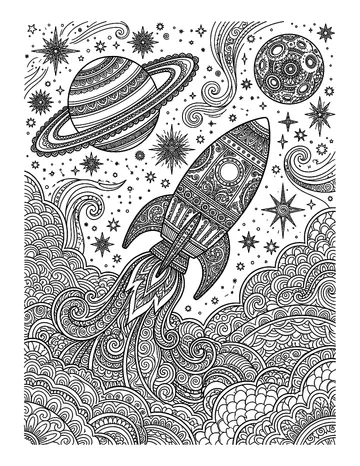
No coloring pages in this level yet. Try switching the filter above to view all pages.
On this page
Cosmic planets, rockets, and astronauts for every age
Blast off into creative exploration with our space coloring pages collection, part of the free printable coloring pages library at AI Print Works. This cosmic gallery brings together planets, rockets, satellites, and astronauts without flags or agency logos, giving kids and adults clean outer space scenes.
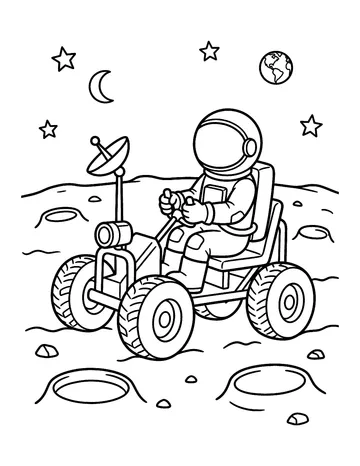
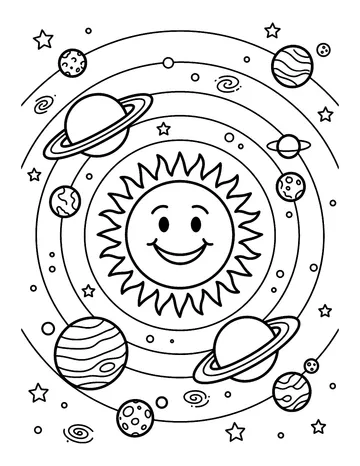
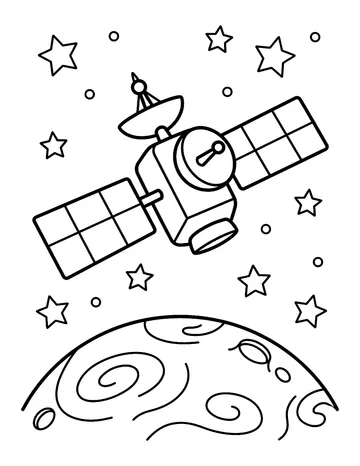
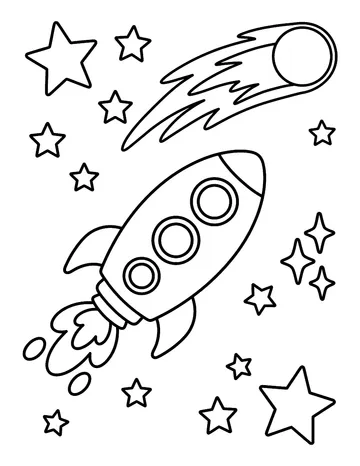
Illustrations designed for children ages four to eight feature bold, even black outlines and large simple closed shapes on a pure white background. Young space enthusiasts can color a classic rocket ship blasting past stars, a floating astronaut beside a ringed planet, an astronaut driving a rover on a moon, a smiling sun with orbiting planets, a space satellite orbiting above a planet, a spaceship flying past a streaking comet, and a ringed planet surrounded by stars. These wide compartments make it easy for children to fill spacesuit visors, rocket fins, and planetary rings with crayons or markers.
For teens and adults who enjoy finer detail, the collection also offers intricate black line art with complex closed shapes and decorative patterns. These pages depict an intricate galaxy of ringed planets, an astronaut floating amid cosmic nebulae, and an ornate rocket launching toward a moon. Pair these cosmic sheets with our dinosaur coloring pages and unicorn coloring pages.
Free Coloring Tool
Turn a photo into a coloring page
Upload any family, pet, or vacation photo and download a clean, printable coloring sheet in seconds.
Try the free toolSolar system highlights and cosmic coloring techniques
Coloring the cosmos is a great way to spark curiosity about planetary science. According to NASA Science, Mars measures roughly half the size of Earth with a radius of 2,106 miles (3,390 kilometers) and gets its reddish appearance from rusty iron minerals in its surface soil and dust. Further out, NASA notes that Saturn is the farthest planet from Earth discovered by the unaided human eye, encircled by a sweeping ring system and moons such as icy Enceladus and Titan.
Whether you are shading realistic solar system planets or inventing distant galaxies, these coloring tips help create depth and luminosity:
- Nebula and galaxy backgrounds: Instead of filling the sky with heavy black marker, softly layer patches of deep indigo, royal purple, magenta, and teal with colored pencils. Leave a thin halo of uncolored white paper around stars and comets so they glow against the dark sky.
- Spherical planet shading: To make a circular planet look like a three-dimensional globe rather than a flat disc, shade the crescent opposite your chosen light source with a darker tone while keeping the illuminated edge pale and bright.
- Gas giant bands and planetary rings: Use curved strokes that follow the contour of the planet when coloring cloud bands in ochre, cream, and terracotta. Alternate icy blues, pale golds, and warm grays across concentric ring bands so each ring stands out.
- Spacesuit visors and rocket exhaust: Blend dark navy at the top curve of a helmet visor down into bright cyan, leaving a diagonal white stripe for glare. Blend lemon yellow, orange, and crimson across rocket exhaust plumes.
Line preparation, printing setup, and usage terms
Every sheet is generated with AI tools, then checked before it’s posted. Each space illustration is cleaned to crisp black outlines on a pure white background with no gray shading, text, flags, or logos, and verified so the subject fits inside the page margin.
When printing at home or in the classroom, select Portrait orientation on Letter or ISO A4 paper and choose Fit to Printable Area in your printer dialog. Standard twenty-pound copy paper works well for crayons and colored pencils. For markers, metallic gel pens, or dark backgrounds, print onto twenty-four-pound paper or sixty-five-pound cardstock to prevent bleed-through. Check our guides on how to print coloring pages and the best paper for coloring for printer settings.
All space coloring sheets are free for personal, family, daycare, and classroom use. Commercial resale or redistribution is strictly prohibited.
Frequently asked questions
What cosmic subjects are included in these space coloring pages?
Our space coloring collection features planets, rockets, and astronauts without flags or agency logos across both kids and adult skill levels. Children can color a classic rocket ship blasting past stars, a floating astronaut beside a ringed planet, a ringed planet surrounded by twinkling stars, an astronaut driving a rover on a moon, a smiling sun with orbiting planets, an orbiting space satellite, and a spaceship flying past a comet, while adults can explore an intricate galaxy of ringed planets, an astronaut floating amid cosmic nebulae, and an ornate rocket launching toward a moon.
Why is Mars known as the Red Planet and what makes Saturn distinct?
According to NASA Science, Mars appears reddish because iron minerals in its surface soil and dust oxidize, or rust, giving the planet a rusty red hue. Saturn, the farthest planet discovered by the unaided human eye, is famous for its expansive ring system and moons like Titan and Enceladus.
What coloring tools work best for outer space backgrounds and stars?
Colored pencils and metallic gel pens work wonderfully for cosmic scenes. Rather than saturating the entire background with wet black marker ink, blend layered colored pencil tones of midnight blue, deep violet, and charcoal around stars and planets, then add silver or gold gel pen highlights.
How are these space coloring pages created and checked?
Every sheet is generated with AI tools, then checked before it's posted. We look for open outlines and stray marks before a sheet goes up, so color stays where you put it. Every page is converted to pure black lines on a white background with no gray shading, so it prints crisply on a home inkjet or laser printer at letter or A4 size.
Are these space and planet coloring sheets free for classroom astronomy units?
Yes. All pages in this hub are free for personal, family, daycare, and classroom use. Science teachers, library program leaders, and homeschool parents may print copies for solar system lessons or space-themed craft stations, provided the digital files and printed pages are never resold or redistributed.